Trying to choose east or west of the Intracoastal in Delray Beach? That one decision can shape how you live every day, from your drive time and parking routine to how often you walk to dinner or head to the beach. If you are deciding between lifestyle, space, convenience, and price, a side-by-side look can make the picture much clearer. Let’s dive in.
Why the Intracoastal matters
In Delray Beach, the Intracoastal Waterway is more than a line on a map. City planning treats it as a meaningful divider between different land uses, densities, and lifestyle patterns.
East of the waterway, the beachside area along East Atlantic Avenue is kept at lower residential intensity because it sits in the Coastal High Hazard Area. In and around downtown, higher residential densities are allowed, while areas farther west are planned in a more neighborhood-oriented way, with parts of Congress Avenue set up for transit-oriented growth.
That planning framework helps explain why east and west Delray often feel so different. You are not just choosing a home. You are choosing the kind of daily routine that fits you best.
East of the Intracoastal
For many buyers, east Delray is all about beach access, walkability, and a lively coastal setting. This is the side that puts you closer to the ocean, East Atlantic Avenue, and many of the destinations people picture when they think about the Delray Beach lifestyle.
Delray Municipal Beach stretches about 1.5 miles and centers around East Atlantic Avenue and A1A. The city also highlights accessibility features at the main beach access and Atlantic Dunes Park, including access mats and beach wheelchairs.
The city maintains public beach areas with year-round guarded sections, which adds to the appeal for buyers who want to be near the shoreline. East of I-95, the Freebee service also supports short local trips, reinforcing the appeal of a more connected, less car-dependent routine.
What housing feels like on the east side
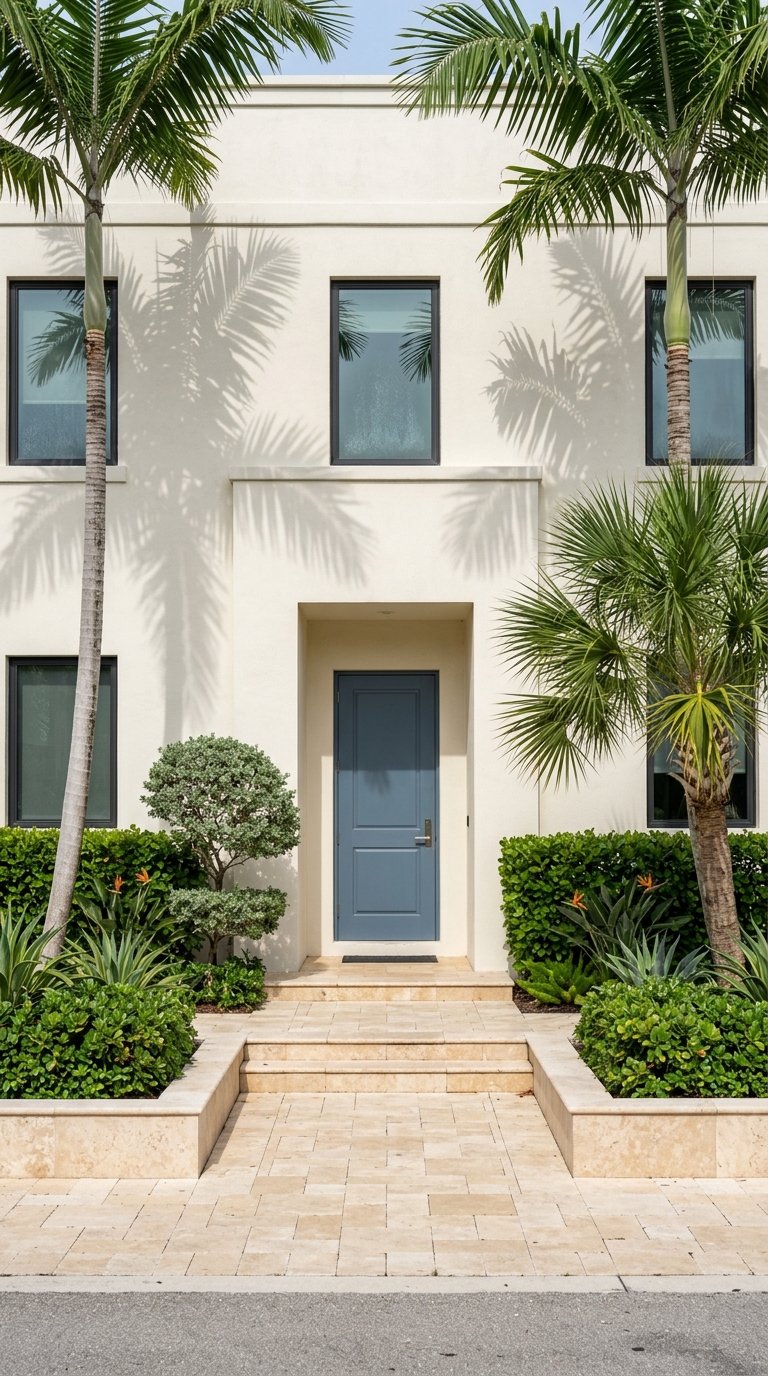
East-side housing often reflects the area’s older, lower-scale development pattern. You are more likely to see a mix of condos, townhomes, single-family homes, and multi-family properties, especially in areas close to downtown and the water.
Some of Delray’s historic districts help show that character. The Marina Historic District stands out for its location near East Atlantic Avenue and the Intracoastal, while Nassau Park is noted as the only historic district east of the Intracoastal and is described by the city as modest and low-scale.
That means many buyers on the east side are paying for location, access, and character more than lot size. If being able to reach the beach, downtown, or waterfront areas quickly matters most, east Delray often delivers that in a way inland areas cannot.
The trade-offs on the east side
The same features that make east Delray exciting can also make it busier. City planning documents note that the stretch of East Atlantic between the Intracoastal and the ocean caters largely to visitors, which creates energy and activity but can also mean less privacy.
Parking is another practical factor. The city provides metered on-street parking as well as public lots and garages downtown, but you should still expect a more active environment than in many inland neighborhoods.
If you love being in the middle of things, that may feel like a plus. If you want a quieter setting with easier day-to-day parking, it may push you to look west.
West of the Intracoastal
West Delray often appeals to buyers who want more residential surroundings, easier commuting, and a broader range of home types and price points. While it may not offer the same beach-adjacent feel, it can provide more flexibility in how you live.
City planning describes the West Atlantic sub-district as neighborhood-oriented, with support for local-serving commercial uses. The Congress Avenue corridor, meanwhile, is positioned for growth and serves as a major connection route to Boynton Beach and Boca Raton.
That transportation network matters in everyday life. Near Congress Avenue, the Delray Beach Tri-Rail Station offers free parking and Palm Tran bus connections, making west Delray attractive for buyers who prioritize mobility and commuting convenience.
What housing feels like on the west side
West of the Intracoastal, you are more likely to find detached single-family homes and other lower-density residential options. The city’s land-use plan reserves low-density residential areas primarily for detached single-family homes, along with neighborhood amenities and community-serving features.
The city also points to neighborhoods such as Country Club Acres off South Military Trail as established single-family areas. At the same time, the Congress Avenue corridor shows that west Delray includes room for mixed-use and newer development projects too.
This is one reason west Delray should not be seen as one single housing category. Depending on where you look, you may find established neighborhoods, newer communities, condo options, or country club settings with very different price points and property styles.
The trade-offs on the west side
The biggest trade-off is usually proximity to the beach and downtown activity. If your ideal day includes walking to the ocean or being just minutes from East Atlantic Avenue’s most active areas, west Delray may feel less immediate.
But that does not mean you are cut off from the action. West Atlantic, I-95, downtown routes, and the Tri-Rail station are all part of the city’s core mobility network, so many west-side locations still offer practical access to the places you use most.
For many buyers, that balance works well. You may give up some walkability to the beach, but gain easier parking, more home choices, and a more residential pace.
How prices typically compare
If you have looked at listings in Delray Beach, you have probably already noticed a pattern. In general, homes closer to the coast and downtown tend to command higher prices, while inland areas offer more entry points.
Recent zip-code data supports that trend. As of April 2026, 33483 had a median listing price of about $1.497 million, and 33444 was around $825,000. Inland zip codes such as 33445 and 33446 were notably lower on the median listing price scale.
These are only zip-level signals, not a perfect east-versus-west boundary. Still, they help explain why many buyers see the east side as a premium for scarcity, coastal access, and downtown proximity.
At the same time, west Delray is not simply the budget option. Recent data shows a wide inland range, including areas around $230,000 to $282,200 at the median listing level, along with higher-end pockets such as Mizner Country Club at about $1.799 million.
The takeaway is simple: east is often more expensive for true beachside and downtown inventory, but west includes everything from more accessible options to luxury communities. Product type matters just as much as location.
A simple way to choose
If you feel torn, it helps to focus less on the map and more on your daily habits. The best side for you often comes down to what you want your routine to look like.
Choose east if you want:
- Quick access to the beach
- A more walkable lifestyle
- Historic character and lower-scale surroundings
- Condo or townhome living near downtown
- A more active atmosphere with dining, visitors, and nightlife nearby
Choose west if you want:
- More detached-home options
- Easier commuting routes
- Simpler parking and daily driving
- A broader mix of neighborhood-style communities
- More variety in price points and property types
Ask yourself these daily-life questions
- How often do you want to go to the beach?
- Do you want to walk to Atlantic Avenue, or drive there?
- Is access to I-95 or Tri-Rail important for your routine?
- Do you want a condo, townhome, or detached home?
- Would you trade square footage for location?
- Do you prefer activity and energy, or a quieter residential setting?
Those questions usually get you closer to the right answer than a broad east-versus-west debate. In Delray Beach, a home’s distance to the beach, Atlantic Avenue, I-95, or Tri-Rail often matters more than the label alone.
Lifestyle fit matters most
There is no universal winner between east and west of the Intracoastal in Delray Beach. Each side offers a different version of living in one of South Florida’s most sought-after coastal markets.
If you want a beach-and-downtown lifestyle with walkability and a strong sense of place, east Delray may be the better fit. If you want more space, more housing variety, and a commute-friendly setup, west Delray may make more sense.
The key is matching the property to the way you actually live. That is where local guidance can make a real difference, especially when you are comparing waterfront condos, single-family homes, country club options, or neighborhoods with very different daily rhythms.
If you are weighing east versus west in Delray Beach, Laura Gallagher and Terri Berman can help you compare lifestyle, location, and property type with the kind of detail that makes your decision feel clear and confident.
FAQs
Is east of the Intracoastal always more expensive in Delray Beach?
- Usually, true beachside and downtown-adjacent inventory trends higher, but west and inland Delray include both more accessible options and higher-end luxury pockets.
Will you get less space east of the Intracoastal in Delray Beach?
- Often, yes. The city keeps the beach district lower-scale and tightly regulated, so many east-side buyers pay more for location and walkability than for lot size.
Is west of the Intracoastal too far from downtown Delray Beach?
- Not necessarily. West Atlantic, I-95, downtown routes, and the Tri-Rail station are all part of the city’s core mobility network, so many west-side locations still offer practical access.
What types of homes are more common west of the Intracoastal in Delray Beach?
- West Delray is more likely to include detached single-family homes and other lower-density residential options, along with some mixed-use and newer development areas.
What types of homes are more common east of the Intracoastal in Delray Beach?
- East Delray often has a mix of older, lower-scale housing types, including condos, townhomes, single-family homes, and multi-family properties near downtown and the water.
How should you choose between east and west Delray Beach?
- Start with your routine. Compare how important beach access, walkability, parking, commute routes, and home type are to your day-to-day life.